















When it comes to slides and sandals, there’s a long-held belief that a back strap is essential for security. No back strap? Must mean unstable, right? Not quite.
In reality, true foot security comes from the front of the foot, not the back. And once you understand how your foot actually moves, it’s easy to see why a well-designed slide can feel incredibly stable, supportive and comfortable without ever needing a heel strap.
That’s exactly what we’ve designed into our Glide slide.

It’s the forefoot that actually does the work
When you walk, your foot moves through a natural heel-to-toe motion. Stability comes from controlling the forefoot, because that’s where your foot pushes off and where unwanted movement usually starts.
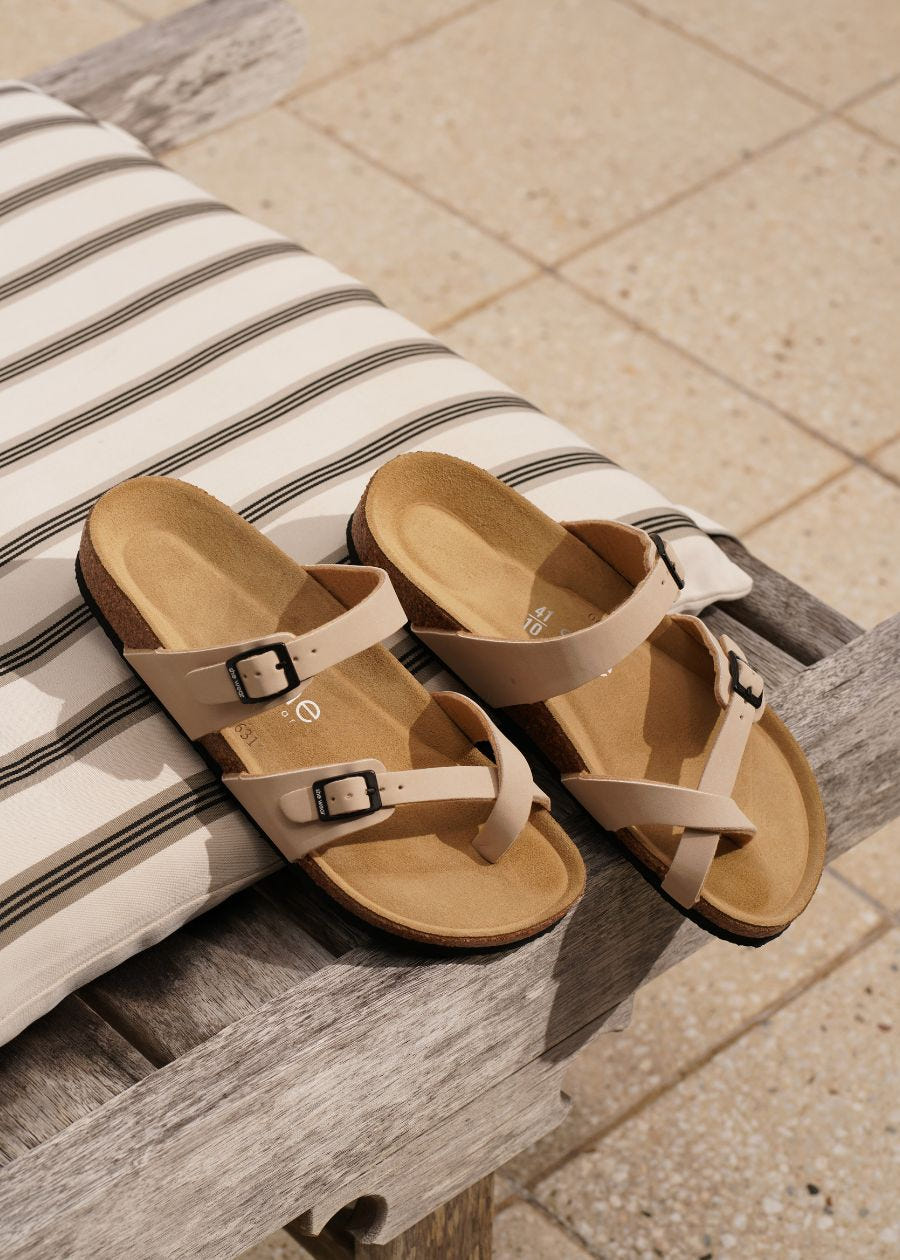
A well-designed toe strap gently anchors the front of the foot, helping to reduce sliding and keeping your foot positioned correctly on the footbed. When this area is supported properly, your foot doesn’t need a strap at the heel to feel secure. This is also why many flat, poorly designed summer slides feel sloppy .. they don’t control the forefoot, so your toes end up gripping just to keep the shoe on!
Why an adjustable toe strap matters
A fixed strap can only suit one foot shape, but an adjustable toe strap allows you to fine-tune the fit so the forefoot feels locked in without pressure or rubbing. By anchoring the forefoot properly, Glide helps reduce internal movement, stops unnecessary toe gripping, and allows your foot to move naturally as you walk. The result is a slide that feels stable, supportive and surprisingly secure even without a back strap.
It’s one of the reasons Glide works so well as a everyday summer shoe or the perfect travel slides. Easy to slip on and off, but still supportive enough for walking, sightseeing and long days on your feet.

Support doesn’t stop at the strap
Of course, a secure upper only works if the support underneath is doing its job too. Glide features a contoured footbed designed to support the natural shape of a woman’s foot. Built-in arch support and a defined toe bar help guide the foot into a more natural position, while also assisting with even pressure distribution across the forefoot and heel.
This underfoot structure is what turns a slide from a casual summer shoe into a genuinely supportive women’s slide you can wear all day.
A subtle heel pitch makes all the difference
Most slides on the market are completely flat or zero-drop. While that might look minimalist, it can actually place extra strain through the heel, ankle and achilles especially if you’re wearing them often.
Glide has a subtle heel-to-toe pitch, designed to support natural walking mechanics and help reduce strain through the lower leg. This makes it a great option for women who experience heel discomfort, achilles tightness or plantar fasciitis, and a far better choice than flat summer slides that offer little support.

Designed to last, not collapse
Support only works if it lasts. That’s why Glide is made with high-quality materials that maintain their structure and cushioning over time, rather than compressing quickly with wear. A durable, slip-resistant outsole adds stability on smooth surfaces, making it a reliable option for everyday wear, holidays, and warm weather travel. These are summer slides designed for real life, not just short trips to the café.
Designed specifically for women's feet
Glide is designed specifically for women’s feet, not just scaled-down men’s sizing. With a shape that reflects women’s heel-to-forefoot proportions and pressure patterns, it offers a more secure heel fit, better forefoot alignment and all-day comfort without needing extra straps or toe gripping.
The takeaway
You don’t need a back strap to feel secure in a slide. You need proper forefoot control, thoughtful adjustability, real underfoot support and materials that hold their shape. and Glide does just all of that making it a standout choice for supportive slides, your go to summer shoe, and comfortable travel footwear you’ll actually want to walk in.
Some serious foot issues are best helped with a back strap. Please ensure you discuss the best style for your foot type with your medical professional.